Tuesday, January 31, 2012

Finance Minister Uses Tax Money for Make Up

Finance Minister Jim Flaherty Charges the taxpayer $130 for beauty care products like Maybelline, Covergirl and Smashbox.

A document from 2008 details how he and his parliamentary secretary Shelly Glover signed off approval for such a purchase in 2008.

“Please note that the cosmetics were purchased on the day of the 2008 Economic and Fiscal Statement (November 27, 2008) to prepare the Minister of Finance for the numerous television interviews conducted with media outlets from across Canada. This was necessitated as the cosmetician arranged to provide the service had abruptly cancelled that day, requiring that it be done by the Minister’s office staff.

The cosmetics purchased were subsequently used by ministerial staff to prepare the Minister, when required, for television interviews in 2008 and the years following.”

Document from Finance Department 2008

Products Flaherty Purchased

  • Cover Girl loose powder
  • Maybelline loose powder
  • Maybelline Concealer
  • Maybelline “Min Brush”
  • Maybelline LMU
  • Smashbox Concealer
  • Cosmetic Wedges
  • Powder Brush
  • Foundation Brush
  • SMB Top Zip Shave

Total: $119.15 on cosmetics and $9.99 on beauty products

According to an order paper by Liberal MP Jim Karygiannis, Flaherty is the only minister to report make up costs on taxpayers.

Flaherty isn’t the only one using taxpayer money for make up, Stephen Harper charges us for his makeup artist Michelle Muntean but the cost hasn’t been revealed as of yet.

With belts tightening and frustration mounting, it remains to be seen how future photo-ops will fair for Conservatives when they attack seniors, one of the main voting groups that assured them their majority government.

Sunday, January 29, 2012

Harper Brought us Back into Mulroney’s Hole

In the May 2011 election, Harper won on the premise that he was a good economic manager and the media touted his management as supreme. Apart from that propaganda, the numbers tell a different story. Despite the 2008 recession being caused by external forces, Harper’s mismanagement is as much to blame for the 2008 crisis and the mess that has yet to be cleaned up.

The Conservatives may claim they are good hands on the wheel in terms of the economy but it is no secret that they dug us into a whole. They claim Canada is leading the G8 out of recession but after the UK (77%), Germany (80%), and France (81%), Canada’s debt to GDP ratio is 84%. Below is a glance at Canada’s debt over the years.

They may load our TVs and YouTube channel advertisement areas with promotions for their Economic Action Plan but the unemployment rate went up in December – not down.

CAPAA_thumb[5]

Canada can apparently afford:

The list of Harper’s increases in spending go on, feel free to add the stuff that wasn’t mentioned in the comments below. This year, Canada will be in a $30 billion deficit and have a $570 billion debt.

Stephen Harper managed to repeat Mulroney’s damage in under 5 years, how can he justify that he is a good economic manager?

With money being wasted on his bureaucratic friends and failed policy, how can you justify his reckless choice of cuts and “major transformations”?

Saturday, January 28, 2012

MP Pension Plan: One of our Great Investments!

The Canadian Taxpayers Federation has an ongoing campaign about the MP pension fund and said Wednesday that MPs have their snouts in the pension trough.In light of Harper’s “major transformations” to the pensions of ordinary Canadians, it is time we take a look at MP pensions. MPs are eligible to take home half of their $157,000 per year salaries starting at 55 as pensions and receive benefits as long as they serve for 6 years. This is way more than the pennies any working Canadian will ever see at 65 – now imagine 67. Many more senior MPs get significantly more than that.

An MP that puts aside $11,000 per year for 6 years guarantees himself/herself $55,000 per year for life come 55.

An ordinary working Canadian “would need to save $129,000 per year over six years to provide the same retirement benefit,” according to the Canadian Taxpayers Federation.

MP Pensions that can be collected in 2015:

  • PM Stephen Harper: at least $223,500 per year
  • Interim Liberal Leader Bob Rae: at least $71,400 per year
  • NDP MP Pierre-Luc Dusseault (19 years old): $40,000 per year if he retires at 27
  • 20 MPs: more than $100,000 a year each

The Canadian Taxpayers Federation estimates you would have to pay a $23.30-to-$1.00 ratio to each MP’s pension plan while the federal government claims that the ratio is only $5.80-to-$1.00.

Even those in the best private insurance plans (contribute $6 for every $7 by employer or $7 for every $8 by employer) will never match up to a 6 year MP.

The MP Pension fund is said to be $170 million in surplus but President and CEO of the Howe Institute points out that the plan is actually $1 billion in deficit. At a 10.4% interest rate, tax payers pay an additional $248,668 per MP on top of the dollar contribution according to the CTF. As a whole, $102 million per year of our money goes to the MP pension fund which is exempt from the pension laws they imposed on the rest of us.

PM Harper said that public service pensions have started to come more in line with that of the private sector.

Finance Minister Jim Flaherty hinted that the discussion would be discussed further saying:

"I think we have to be reasonable in all of our remuneration schemes, including salary, benefits and pensions, and that applies to all of us who are in the world of public service, whether we're politicians or employed by the government of Canada as public servants or elsewhere," he said.

"I'm sure that we will have different views expressed about what is reasonable and what isn't," he said. "It's not for me as a single member of Parliament to make that determination."

However, confidence in financial prudence wanes.

"There's no way the prime minister and these MPs can do what they need to do to balance the budget and control spending if they've got their own snouts in the pension trough. They need to lead by example," said Gregory Thomas, CTF federal director. "They need to put Canada ahead of their own personal bank balance."

Friday, January 27, 2012

Harper: “Our Government will Undertake Major Transformations”

imageHarper announced at the World Economic Forum in Davos Switzerland that his Conservative government would be bringing in “major transformations” to the retirement pension system, immigration, science funding, and the energy sector but left no concrete plans on how these changes would take place. The opposition charged that his retirement changes would financially cripple millions of Canadian seniors.
Retirement

With Harper looking for savings, the Canadian government will soon be gradually raising the retirement age from 65 to 67.

“We have already taken steps to limit the growth of our health-care spending over that period,” said Stephen Harper. “We must do the same for our retirement income system.”

In 2010, retirement cost $36.5 billion which is expected to climb to $48 billion by 2015. Currently there are 4.7 million seniors who will rely on the Old Age Security system and that number is expected to nearly double to 9.3 million at a cost of $108 billion by 2030.

The NDP came out in firm opposition claiming that investing $700 million would make the system more sustainable and not require the age change.

“That’s completely unacceptable. If he had run on that platform last May, he wouldn’t have the numbers he has in the House he has today,” NDP finance critic Peter Julian said.

“If he’s serious about the demographic shift, he should listen to evidence and invest in hospital beds, not prison beds,” said Liberal critic Scott Brison.

“It would be a very regressive step to cut or restrict OAS at a time when income inequality is growing issue.”

Energy

Exporting Canadian oil and energy sources beyond the US and specifically to Asia will become a “national priority.” No plan was announced but as it stands, Harper and Natural Resources minister Joe Oliver are slamming opponents of the $5.5 billion Northern Gateway project which would build a pipeline through environmentally sensitive lands to prepare for export. It turns out that the Harper government may have explaining to do when it comes to having independent bodies become their spin machine.

Immigration

Harper said that our immigration system will face “significant reform.”

“We will ensure that, while we respect our humanitarian obligations and family reunification objectives, we make our economic and labor force needs the central goal of our immigration efforts in the future.”

Science

Harper said that his government plans to continue investing in the sciences – while Environment Canada reels from Harper’s attack. “But we believe that Canada’s less-than-optimal results for those investments is a significant problem for our country.”

Trade

Expect a Canada-European Union free trade agreement this year as Harper intends to open our markets.

The government will also try to tap into Asia’s emerging market and make a Trans-Pacific Partnership.

By the end of 2013, Harper hopes to have established a free trade agreement with India.

Harper’s Full Speech

Tuesday, January 24, 2012

NDP: Tony Clement Should Turn Himself In

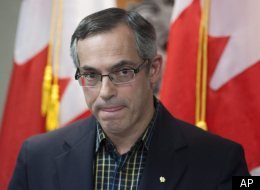
Tony Clement G8The NDP have disclosed documents that prove that Tony Clement had a say in how the $50 million G8 “slush fund” was managed. In response to their findings, NDP MP Charlie Angus is calling on Tony Clement to turn himself in to the police. Clement fought back claiming that the NDP were only reusing old facts and changing the notion of recommendation into order.

The documents obtained under the Access to Information Act found a contradiction in Clement’s testimony.

Tom Dodds, from FedNor, a northern Ontario development agency, says his agency helped Clement’s office send letters to municipalities which stated that their collective 242 projects would not receive funding and nor would "their projects would not be forwarded to Minister Baird for his consideration.”

"A list of unsuccessful applicants was provided by the minister's office to FedNor officials and letters were prepared in accordance with the direction received from the minister's office.
Finally, once Minister Clement's office provided the list of recommended projects to Minister Baird's office, FedNor officials transferred the catalogue of projects to Infrastructure Canada officials. All 242 project proposals were sent; this included the 32 projects which were recommended by Minister Clement."
Memo summarizing Dodd’s Involvement in Legacy Fund
Source: Huffington Post
The memo was written by the deputy minister of Industry on the same day as Clement told a commons committee about his role in dispersing the funds.
"It is my understanding that MINO (Clement's office) advised Infrastructure Canada which projects should be supported under the G8 Infrastructure and Legacy Fund and their staff prepared contribution agreements for them accordingly."
Tom Dodds, FedNor – January 13, 2010 – Email
Source: Huffington Post
"That's just a myth," Tony Clement told the commons committee. "It never happened that way. We were not involved in selecting these projects."

Clement went on to explain that 242 projects were submitted by Municipalities but he then restricted it down to 33 where 32 of which got the approval.

In September, Clement told reporters that his direct influence in the use of the fund would be illegal and went as far as to say:
"If I was the decision-maker, if I had set up a parallel process and created a situation where the auditor general did not know — that's their (opposition MPs') accusation — I'd be resigning right now and turning myself in to the local police office."
Tony Clement – September 2011
Source: Huffington Post
The former Auditor General slammed the Tories for misleading Parliament on G8 matter. The issue led to a Motion of Contempt which ended with a majority win for the Conservatives.

The Price of Harper’s Omnibus Crime Bill

States cut drug penalties as Canada toughens themHarper’s omnibus crime bill is set to cost Ontario tax payers over $1 billion in increased police and correctional service costs. With this massive jump in spending toward a crime initiative that has failed in Texas, what are the repercussions on the end users – tax payers.

Canada is slowly and barely recovering from the worst economic downturn since the great depression and with the federal budget maxed out as it is, and about to undergo austerity, Harper has decided to ram his ideology down the throats of provincial finance ministers. As we speak, provincial budgets are in bad shape and their debt to GDP ratios are higher than that of the federal government.

Harper claims to be the low tax leader of a low tax party after recklessly taxing income trusts in 2006 – after making it crystal clear that he would never do it. “Don’t forget this! Don’t forget this!" he preached. Harper brought in 2012 with a tax on jobs as he hiked EI premiums and now, with this reckless spending projects, if provincial budgets aren’t axed in a way never seen before, Canadians can expect province-wide tax hikes to pay for the cost of the War on Drugs which the Texans have warned: doesn’t work.

Conservatives Tax Income Trusts
Conservatives Tax Jobs
Ontario isn’t the first province to criticize the plan – citing that it is expensive and that it has already hit 95% capacity in provincial jails and would have a 150% jump of new inmates by 2016 if passed – Quebec and Newfoundland have also condemned bill C-10 as it would overwhelm already maxed-out budgets and correctional facilities. On the other hand, Alberta, British Columbia, and New Brunswick support the bill – and are all run by Conservatives.

The Conservative omnibus crime bill: not only a failed approach to fight crime, yet another expense added on and yet another excuse for future tax hikes.

Recommended Article:

States cut drug penalties as Canada toughens themCanada Going Backward on Crime
Excert: “The Americans have been fighting the war on drugs for more than 20 years with their tough-on-crime agenda. However, the Americans are now moving away from mandatory minimum sentences without any chance of parole as more than 20 states struggle to afford it in the current economic times. All the while, Tory PM Harper plans to impose their failed justice system on Canada.” Read More…

Monday, January 23, 2012

Harper Government Accepts Funds from American Interest Groups

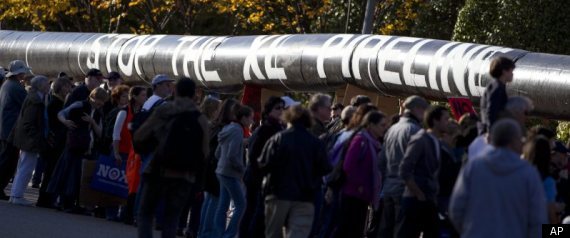
Pipeline Special Interest FundingThe Harper government has labeled and attacked opponents of the XL Keystone pipeline project on the premise that they received funding from American environmental groups. It turns out that the Harper government has also been getting foreign funding.

According to tax returns the government has received millions of dollars from some of the wealthiest American corporations to prop up the Pipeline project. After slamming the opposition for accepting money, the Harper government opened its hands and in some cases, got the same donor as the other side.

US tax returns show that the William and Flora Hewlett Foundation gave $750,000 to the David Suzuki Foundation and $40 million to the International Development Research Center, a federal-owned corporation. The William and Flora Hewlett Foundation has funded other Canadian agencies in the past.

The John D. and Catherine T. MacArthur Foundation gave $695,000 to World Wildlife Fund Canada and $300,000 to the Departments of Foreign Affairs and International Trade.

When we add this update to the Conservative charge and their organization – as talked about in a previous article – you have to wonder how much more is hidden under this deal that we don’t know about.

Recommended Article:

Harper’s Alliance with Ethical Oil and Sun Media

Sunday, January 22, 2012

Harper’s Alliance with EthicalOil and Sun Media

409189_352175181460196_209155619095487_1484295_1796893631_n

Stephen Harper’s Conservative government has been aided by external organizations in their effort to start the exploitation of the Alberta tar sands which is known to be the dirtiest oil source on the planet. With Harper’s tight message controls in Environment Canada, the RCMP, among other departments, it is no surprise that the government’s response on issues surrounding the Keystone project have been very well coordinated and outsourced as well.

A week before the first hearings on the Northern Gateway Pipelines, a PR campaign by EthicalOil.org and its allies hit the ground running. It was the first offensive against First Nations and Environmentalist groups who came out in staunch opposition to the plan.

The amigos launched OurDecision.ca which attempted to label the opposition groups as foreign interest groups as they had pointed to American funding to their causes.

Natural Resources Minister Joe Oliver released an open letter Monday condemning some opponents of the Northern Gateway pipeline, arguing that "radical groups" are exploiting the review process. - Natural Resources Minister Joe Oliver released an open letter Monday condemning some opponents of the Northern Gateway pipeline, arguing that "radical groups" are exploiting the review process. | Adrian Wyld/The Canadian PressAfter Sun News launched its first campaign, other national papers and media providers followed, slamming opponents as foreign interest groups. This rhetoric made it up to Parliament Hill where Natural Resources Minister Joe Oliver wrote a letter to Canadians which denounced the foreign environmental organizations who had helped to fund Canadian opposition efforts. Harper, meanwhile, pointed to EthicalOil.org’s cause and started to claim that foreign interests were trying to overturn a Canadian project.

While the 3 efforts seem to be independent yet coordinated, there is evidence that links the Harper government, Sun Media and EthicalOil.org.

The Ethical Oil Echo Chamber is based off a book written by Ezra Levant which made its way to mainstream media as three prominent excerpts were commonly found in all of the Sun’s media. After a series of articles through Sun Media, the National Post and other right-wing outlets, the echo chamber started to amplify the tenants of ethical oil. Before long, Alykhan Velshi helped Levant turn his book into EthicalOil.org and it soon reached the mouths of politicians – notably from the Conservative party. As a small background on Ezra Levant, back in the days of the Reform Party, Ezra stepped aside in Harper’s riding so that he could first take it.

At the center of the Conservatives’ pro-oil dialogue we find gonewclearproductions.com which is part of a network of 50 websites which are connected to the Conservative Party, the Wildrose Alliance Party and EthicalOil.org among others from the right-wing.

image

Go New Clear’s President, Hamish Marshall, is the husband of Ethical Oil spokesperson Kathryn Marshall who has been a Conservative campaigner and former PMO strategist who is deeply connected to oil interests.

Several Principals of Go New Clear are also linked to the Conservative party. Brendan Jones administered the website when Harper was in official opposition in 2005. He is now part of Conservative Caucus Research Bureau which is tasked to marketing the messages from the PMO.  Another Principal, Travis Freeman is listed in the CCRB.

Digital footprints provide the links of Sun Media – as if Ezra Levant wasn’t enough.

The Sun and other satellite sites have the same CSS Reset, written by the same person. The IP addresses from the servers were only different by two numbers and are likely sitting next to each other.

Linked Sites by CSS Reset

EthicalOil.org

JasonKenney.ca

OurDecision.ca

GoNewclear.com

RichardDur.ca

SunTVNews.ca

PaulHinman.ca

Cummins4BC.ca

campusPC.ca

DriveOutTheTax.com

JohnParker.ca

KathrynMarshall.ca

DavidYager.ca

VoteDougCooper.ca

DustinNau.com

axethegastax.ca

JoeOliver.ca

Amerians4OPEC.com

PierreMP.ca

Wildrosecaucus.ca

abingdon.ca

CorrieAdolph.com

Go Newclear's Brendan Jones’ personal website.

CalgaryWard14.ca


HeatherForsyth.com

Source: desmogblog

The links are evident. The Conservatives try to say their opponents have a hidden agenda and interest groups. How do you explain this?

The Conservatives and Sun Media keep attacking the CBC as a Liberal propaganda engine, is that not hypocritical?

As for environmentalists being foreign interest group radicals, how do you explain that the Conservatives base all their decisions off the oil lobby?

Rae Popularity Surpasses Harper and NDP

Bob Rae More Popular Stephen HarperThings are starting to look up for the Liberals. For the first time in a long time, a Liberal leader has managed to get a higher approval rating than the Prime Minister. However, rest in mind that there are still enough undecided to sway the curve.

The Liberals remain in third place nationally but from their most devastating election defeat in May, they have made real progress. Their gains in membership, their upward trend in polls and their over-packed convention have put them in a very good place. With an NDP MP crossing the floor from the Official Opposition to the Third Party Liberals, you can only imagine how happy the party must be – and how strange a decision of Lise St-Denis to leave the official opposition to go to the third party.

A poll by Forum Research shows that 39% of respondents approve of Bob Rae as interim leader and 32% disapprove leaving 29% undecided.

The same poll found that Harper’s approval rating was only 37% and that only 9% have yet to make a decision on Harper leaving a disapproval rating of 54%.

In retrospect, this means that Rae with a current score of 7 beats Harper with a score of –17. However, with 29% undecided, Rae’s score could plummet if he makes the wrong move.

The numbers from the Forum Research on the eve of the Liberal convention is consistent with the results found by EKOs polling from mid-December.

In that poll, Harper had an approval of 34%, disapproval of 59% and undecided of 7%. Rae had a 44% approval, 24% disapproval and undecided of 32%. This would give a score of 20 for Rae in comparison of –25 for Harper.

Both polls stated that Rae’s approval ratings were highest in the province he once governed as an NDP Premier. During this time, Ontario was in recession and people were left with a sour taste which the Conservatives and National Citizen’s Coalition are trying to revitalize.

NCC Attacks Bob Rae

Rae responded vowing to attack Harper if he is attacked and slated that he would remind Canadians of Harper’s unflattering remarks about them. This includes the quote where Harper calls Canada a glorified welfare state in the worst sense of the term and the one where he says that he is unsympathetic for the unemployed as they choose not to work.

Bob Rae’s Response

The poll states that Rae is doing better than both the Conservatives and NDP, however, he is no match to Bank of Canada head Mark Carney and he is no match to American President, Barrack Obama. There has been speculation that Rae may run for permanent leadership but he has not specified. Should this scenario happen, it is uncertain how his approval ratings will evolve.

Saturday, January 21, 2012

Advice and Caution for NDP Leadership Candidates

The NDP leadership race is soon coming to a close and they will crown one of  8 people as their new leader. The media has claimed a two-way race between Thomas Mulcair and Brian Topp for leader but this speculation is useless as it will be the card-carrying NDP members that will make the final verdict. Based on Liberal failures in the past 6 years, here are some pieces of advice and caution:

  1. Hide or get rid of multi-citizenship. Thomas Mulcair, having a French and Canadian citizenship may be destined to the same route as Stephane Dion and Michael Ignatieff who were attacked by both the NDP and Conservatives on their commitment to Canada. The Conservatives have an efficient machine and be warned, your past attack on the same issue can be brought back to haunt you.
  2. Avoid tax hikes. Brian Topp has made them the forefront of his economic policy. Michael Ignatieff got labeled a tax and spender with one attack ad which portrayed him in a restaurant saying that a GST hike was “not off the table.” Taxes are widely seen as a repressive way of getting revenue and in tough economic times, Canadians would rather see Harper’s waste – there is a lot of it – be shaved off than have their taxes hiked. Polls even suggest that “big bad corporations” aren’t as bad as you try to make them out to be. As a word of caution, taxes are a tool of wealth distribution and the problem in Canada is a lack of creation of wealth. The rich will leave if you raise their taxes. As you raise taxes and lose revenue as markets saturate and dry up, you will see those spending projects become a burden to Canada’s debt and fiscal health. It’s a bit late for Brian Topp, but perhaps the other candidates can learn from his mistake. Families are barely making ends meet and tax hikes are the last thing they want to hear – look at Quebec!
  3. Don’t use petty attacks! The attendance issue and the new politics issue has come back to haunt you and made you look like liars who only care about power. Focus on the real issues.
  4. Don’t become arrogant. Ignore the media when they claim a party is a natural government or a natural opposition, it failed the Liberals big time.
  5. Be pragmatic. A vision is important but pragmatism is the only way you can fulfill your dream. Tax hikes and big spending projects and the notion of big government won’t work well here – it hasn’t worked in Europe either. While it may pain some of the more philosophical of the group, the only way forward is the way to the center. Ditch the more radical left-wing ideas and move to the uniting and rational center.

We will soon find out who will become the NDP leader. As we speak their numbers are slipping and people are leaving the honeymoon in droves. Perhaps, if they can realize these 5 tips, they can make use of their gains and work toward making Canada a better place.

Poll: No Link Between Income Gap and Corporate Profits

A sign held by a protester marching near Toronto's financial district on Oct. 15, 2011. A new poll finds Canadians agree there is a growing income gap, but not on who or what to blame.

Canadians agree that the gap between the rich and poor is increasing but they aren’t buying that the cause is corporate profits. In fact, a recent poll suggests that Canadians don’t attribute any concrete blame for the issue.

In terms of the size of the gap, 66% of respondents believe that the gap has been the biggest in history – as opposed to 27% who responded that they didn’t and 4% who thought the gap got smaller.

In terms of the cause 74% of respondents gave an answer but  there is no clear cause, but there are a few.

Causes for Gap Between Rich and Poor

  • Tax breaks for the rich: 18%
  • Capitalism helping the rich: 14%
  • Regional or Structural Disparities in Economic System: 10%
  • Government Policies: 7%
  • Fewer Jobs for the Middle Class: 6%
  • Greed and Speculation: 7%
  • The wealthy work harder and earn what they make: 5%

Source: CBC News

The poll also suggests that opposition of corporate profits is dropping. The bulk of those who said that corporate profits were bad were from Atlantic Canadians, older respondents, lower-income Canadians, and NDP supporters. The positive views mainly came from Conservative supporters.

(CBC)

When it comes to fixing the problem, 52% strongly think and 30% somewhat think that the government should be finding ways to shrink the gap.

Telephone interviews for the Focus Canada 2011 survey took place between November 21 and December 14, 2011 and surveyed 1,500 Canadians of age 18 and older. The margin of error is slated as plus or minus 2.5%, 19 times out of 20.

Thursday, January 19, 2012

Looking onward to the 21st Century

Canada is entering the 21st century based on technology of the 1800s. Our education system is an assembly line. Our healthcare system assumes that patients are not well enough informed to manage their own medical records. Our bureaucratic structure is unnecessarily complex and large for the services we need to produce. Add on the abuses and perks and misplaced priorities and you get a very expensive system that doesn’t work very well.

Canada needs to have a big discussion. A discussion on policy. A discussion on the future of our country. No, it won’t be a discussion on whether capitalism has failed and whether we should replace it with yet another model from the past, it will be a discussion on how to create a model for the future.  The discussion will start on our Facebook page where we will be presenting a forum. Please do invite your friends and family, and have them invite their friends and families to join the discussion by liking and participating on our page.

The NDP are going to be working on a way to justify a tax hike agenda in tough economic times with an unbalanced budget. In the next election, we can likely see them running on the famed “tax the rich” stance and then promise massive new spending projects that they will claim will be beneficial to society and the economy. While it sounds like a good plan – especially when they really start talking about the more socialistic values behind it – it really is nothing more than deception.

Taxes are not a means of revenue, never were. If you had an economy that was next to dead, taxing citizens, businesses, or the rich, by 15% would mean the same as taxing them by say 50%. The difference would be marginal because the economy in this scenario is so weak that money is practically non-existent. This is because tax hikes are wealth distribution and not wealth creation.

The Conservatives have already made reckless tax cuts that make government less flexible, but reversing those cuts incurs greater penalty than having made them.

The Liberals haven’t yet went public with a policy on the economy that is concrete, however, they did have an inspiring speech at their convention.


It is time that we do things differently and innovate to create the 21st century’s world leading model. Now is the time, The Discussion Starts Here!

Tuesday, January 17, 2012

Department of National Defense: People or Fancy New Office?

The Department of National Defence is currently headquartered at 101 Colonel By Drive in Ottawa.The Department of National Defense is one of the departments slated for cuts as Harper searches for $4 billion in savings. However, as 2,100 employees are packing their stuff and moving out of their offices, renovations have been slotted as new spending. These renovations, at a cost of $379,000 tax payer dollars, can be found in the deputy defense minister’s office.

Renovations started in June 2011 after Robert Fonberg gave the green light to renovations on his office in May. The seven-week renovation included moving new associate deputy minister Matthew King and his staff to a shared space in DND headquarters at 101 Colonel By Dr. in Ottawa.

An internal briefing note justified the $379,000 in spending claiming it would "improve the efficiency and effectiveness of the deputy minister's office."

DND defended the cost claiming that the office hadn’t been upgraded since 1992 and that they found savings in the process.

"New requirements emerged that are appropriate for the offices of the senior civilian leadership at national defense," read a statement from the DND.

The new renovated office featured 9 workers and the department wouldn’t explain how the renovation money was spent.

Derek Fildebrandt responded on behalf of the Canadian Taxpayers Federation to the renovations calling it “an incredible waste of resources."

"Department heads and leaders need to lead by example, nowhere is this more important than in the military.

It should have never been approved, especially not since we're spending hundreds of millions of dollars to move [DND] to the other end of the city... into the old Nortel buildings."

Derek Fildebrandt, National Research Director of Canadian Taxpayers Federation

DND is moving its headquarters to the former Nortel Networks headquarters in West Ottawa at an expense of $200 million in 2010.

At a price of $200,379,000, how many jobs could you have saved? Yet another example of Conservative mismanagement which is coming even more to light as they try to fix their mess with cuts that are painful and in the wrong places.

NDP Takes Page From Tory Handbook

What do Lise St-Denis and Irwin Cotler have in common? Apart from being Liberal MPs, they have both been attacked by their opposition using the dirtiest tactics available. The NDP has claimed for years that the Liberals and Conservatives were destroying democracy with vicious politics and offered themselves as an alternative. It appears that the “Fix(ed) Ottawa” that Jack Layton spoke of was hot air and unfortunately, it’s not the first time this blog has come to this conclusion.

The Conservatives hired a firm to send a robocall to impersonate the Liberal Party to garner support using an endorsement from a retiring MP. Irwin Cotler is still in the House of Commons sitting as an MP.

The New Democrats are taking the loss of Lise St-Denis, a new MP from the Orange Wave very badly. Not only are they asking for a bi-election in a system that votes for representatives – not parties – they are desperately trying to discredit her integrity as an elected official.

The NDP was behind a robocall campaign that filled St-Denis’s phone lines with calls asking for her resignation on January 12 and 13. St-Denis’s riding assistant, France Beaulieu, estimated that 300 to 400 calls paralyzed her office.

The NDP robocalls, hosted by Strategic Communications Inc., asked constituents to press one on their keypads if they disagreed with St-Denis’s decision to switch to the Liberals. Admittedly, NDP Spokeswoman Sally Housser said that 1,000 constituents were transferred with that robocall.

“We have no intention of abandoning the people in the riding who voted for the NDP and we plan to keep them informed and not abandon them even though Ms. St-Denis and the Liberal Party really have no respect for their democratic rights.

When MPs take unpopular positions and actions they should deal appropriately with reaction from their voters.”

Sally Housser, NDP Spokeswoman

Housser said the message didn’t indicate that the call came from the NDP and said the tactic was legal as it was used in the past. The numbers used in this attack will be used for future NDP fundraising campaigns. St-Denis is looking into her legal options.

“I find it immoral to block phone lines that belong to the government. They don’t have a right to do that. It is prohibited to use phone lines that belong to the House of Commons for political action.”

Lise St-Denis, New Liberal MP

Housser’s revelation comes a day after an interview with iPolitics where NDP’s Quebec Caucus Chair Guy Caron stated that the NDP wasn’t responsible.

“This is not our way of doing things so I would be extremely surprised if it came from us,” said Caron.

Not only are the NDP using dirty tactics, they are lying through their teeth to hide them. Shall the NDP lies and dirty tactics continue – you got what you voted for. The NDP don’t care about our democratic system, they care about advancing their agenda: power.

Monday, January 16, 2012

A Look at Conservative Cuts

Treasury Board President Tony Clement is in charge of trimming budgets across government departments. He's shown here Aug. 4 announcing the creation of an agency to streamline government computer systems. The Conservatives like to claim that they shrink government size and spending. Like with Progressive Conservative Prime Minister Brian Mulroney, spending soared and Canada crashed. Mulroney introduced the GST, but that was not enough to clean his mess. In the 1990s, the Liberals under Jean Chretien took the unpopular decision to make cuts and the way they did it turned out to be widely successful as it gave the Liberal Party 13 years of uninterrupted power. Now, the Conservatives are left with no choice but to try it for themselves – for the first time.

As we go down the list, we will note many job cuts, but as of yet, no MP salaries/pensions, senator salaries/pensions, or executive bureaucrat salaries/pensions have been brought to the chopping block.

Summary of To-Date Cuts by Conservatives

  • Atlantic Canada Opportunities Agency: 42 positions; $15.2 million savings; October 19, 2011
  • Bank of Canada: 33 workers; June 6, 2011
  • Canadian Museum of Civilization: 8 positions; August 16, 2011
  • Environment Canada: 776 positions in air; 300 eliminated; affects main scientists, engineers, and meteorologists; August 4, 2011
  • Fisheries and Oceans: 275 positions; $56.8 million savings by 2014; October 13, 2011
  • Human Resources and Skills Development Canada: 600 positions; EI processing centers affected
  • Industry Canada: 26 positions; June 26, 2011
  • National Defense: 2,100 civilian positions over 3 years
  • National Gallery of Canada: 5 curators; June 2, 2011
  • National Research Council: 52 positions; June 23, 2011
  • Public Works and Government Services Canada: 700 staff over 3 years; mainly labor force; August 4, 2011
  • Treasury Board: 84 jobs over 3 years; $11.5 million savings
  • Veterans Affairs: 400-500 positions; $226 million savings; October 21, 2011

Source: CBC

The Harper government is looking for $4 billion in savings but yet the list of his government’s abuses with money keep adding to the list.

A Sample of Conservative Misuse of Public Funds

Are the items above worth the purchase? Why not cut those first? Like the trips at the Public Service School, there is no word of it being scrapped as it should. When will MPs and government officials be held accountable for their actions? The Conservatives, lowering spending? Anything but. Conservatives making cuts? The wrong cuts.

Liberals Lay Framework for Bold New Red

IMG_0083While skeptics fought a reasoned fight against some of the Liberal Party’s new constitutional amendments, the party voted with sufficient numbers to pass some of former President Alfred App’s controversial departure gifts. In doing so, they also took a stab at new policy conventions and voted for a “Bold New Red.”

The Liberal Party is far from dead. The Ottawa Convention Center was filled to a point that walking across some hallways and getting places within the large complex proved difficult. Over 3,200 Liberal members took the floor, more delegates than the Conservatives and NDP combined. Within the surge, a noticeable youth presence, with a strong movement for interparty change.

The race was said to be close for Liberal presidency and after 3 recounts the Liberals crowned Mike Crawley victorious over main contender, Sheila Copps, by only 26 votes. After the large push for change and new innovation the night before, it is no surprise that the “bold new red” took the helm.

Policy and strategy was debated in miniature workshops and by the end, resolutions were put to vote on day 3. The workshops in the Critics corner were overfilled and featured open-mike discussions on Healthcare, Science funding, Justice, the Environment, and Government Accountability among other topics.

Of the multiple resolutions debated in Canada Hall, Abolishing the monarchy was rejected, but legalizing marijuana got 77% of the yes vote.

Many Proportional Representation activists hit the opposition mikes but 73% voted for a preferential vote system which looks strikingly similar to Alternative Vote in Britain.

In terms of the Liberal constitution, people can now sign up to be Liberal “supporters” which is a dumbed down membership which is free and limited to those 18 years and over. Age and powers to vote on the next leader were main concerns, among relevance and practicality of the idea. An Alberta delegate who argued against the movement noted that the initiative had failed in the province and had higher costs.

The primaries idea for Liberal leadership fell flat and the race is set for next year.

The amendments to the constitution lead to confusion and some delegates pushed to have some amendments revised and reconsidered. None of the amendments could be amended on the floor but the party generally voted within healthy motions.

With a new president, and the passing of some controversial ideas within the party’s structure and policy, what do you think comes next? Are they headed in the right direction? Or has the sense of need for change overwhelmed their sense of rational thought?

Thursday, January 12, 2012

Conservative Logic Behind Healthcare: Revisited

Federal Finance Minister Jim Flaherty, right, speaks to Bank of Canada governor Mark Carney prior to to a provincial, territorial and federal finance ministers meeting in Victoria Monday.In a previous post, I analyzed the main talking points of the Conservatives and found that a basic logic behind their proposed cuts in spending increases for provincial healthcare transfers made sense. However, while the logic behind the plan was sound, the plan itself wasn’t. The lack of leadership and the misguided neglect of the system will lead to bigger problems in the future – at least, this is what the Parliamentary Budget Watchdog says.

The Tory plan leaves the provinces to figure things out on their own. In their stunned independent recollections, we can expect tax hikes or massive cuts to service due to this move. While it would save Ottawa billions annually, the lack of a concrete plan kills its sound logic.

Cuts are tricky; cut the right things and you can improve service, cut the wrong things and you are left with a structural mess that will actually inflate in cost over time.

With this change, Canada's fiscal health would do fine, debt could be repaid, taxes could be reduced and spending increased – on the federal level. But there is a price: the quality of our healthcare and the fiscal health of our provinces and that would mean a counter-balance toward the provinces – don’t expect to gain anything.

Page published his predictions of what would happen between now and 2018 if healthcare transfers are paired with economic growth at 3.9%.

Page’s Predictions

  • Federal government could reduce revenue (cut taxes) or increase program spending or a combination of both.
  • Substantial decrease in federal payments to provinces.
  • Provincial and territorial Debt-to-GDP ratios will rise substantially – a recipe for disaster.
  • Growth in program spending is squarely in hands of provinces with limited resources.
  • Federal and provincial combined debt will grow substantially faster than the economy and thus make Canada’s overall debt to GDP ratio grow substantially – another recipe for disaster (look at Greece).

So what does this all mean? It means that without a plan and only cuts, you will create cost runoffs down the road. Spending increases are not sustainable and they do need to be scaled back, but there needs to be provincial and federal leadership for it to work and neither conditions exist.

If the cuts mean a restructuring and re-innovation of the system to bring savings, cutting down on bureaucratic fat and misdiagnosis with more prudent techniques, or setting guide lines and targets to get there, it makes sense, but the government hasn’t done either and the provinces are clueless.

The economic logic is sound, we need a more efficient healthcare system. However, the implementation and execution are flawed to the point that it could destroy healthcare and put the country needlessly deeper into debt.

Tuesday, January 10, 2012

Quebec NDP MP Crosses Over to Liberals

ndp defection, lise st-denis, liberals

Quebec NDP MP Lise St-Denis crossed over to the Liberals citing the party’s pragmatism and her belief that their values are the best suited for her people. With this drift, the Liberals gain a seat to make 35 in the House of Commons at the expense of the NDP who now have 102.

“I am in the Liberal Party because its direction on social policy, on job creation, on external affairs and on the environment appears to me as being able to generate hope for all people living in communities in my riding.

We live in a time of fundamental transformation, globally and nationally. It is thus crucial that we make choices that will undoubtedly protect who we are and who we want to be."

Lise St-Denis, Press Conference, January 10, 2012

Her message to supporters in her Quebec riding of St-Maurice-Champlain which was one of the 59 Quebec ridings that turned NDP in the Orange Wave is to understand her decision.

“They voted for Jack Layton. Jack Layton is dead,” Ms. St-Denis said.

Before joining the Liberal party, she backed Thomas Mulcair for NDP leader, the most centrist and pragmatic NDPer in the crowd.

The NDP, meantime, fought back with every nasty tactic they had in their arsenal, showing just how power hungry they actually are.

They called her move a lack of respect to democracy, and party insiders didn’t have anything good to say about her character either.

"They say Ms. St-Denis was a difficult, almost impossible person to work with," CTV’s political correspondent Bob Fife said, relating the NDP's standpoint that, "This is not a coup for the Liberal Party."

This move is significant as it is very early in the game and the NDP are not only losing massive amounts of support in Quebec, but one of their members moved to the Liberals. As a bit of background, the Liberals are the party that the NDP fought long and hard to destroy. During what some NDPers call a “bittersweet” election the NDP joined the Conservatives in an attempt to finish off the Liberals at the expense of a Tory majority government with an NDP opposition.

Let us not forget that St-Denis is a free woman and has been handed the duty of representing her constituents and the responsibility of making their best interests her priority and this, NDP, should be across party lines. The fact that the NDP would make such a big fuss about the matter only demonstrates how little they care about the constituents they represent and want to impose a radical left-wing ideology upon and how much they care about forming the next government – which with their attitudes, may never happen.

Harper’s Office of Religious Freedom: Worth It?

Sometimes you have to wonder where the Conservatives find the money to afford their new initiatives while they preach austerity. The Conservatives are now making a Religious Freedom Office within Foreign Affairs at the expense of tax payers.

Canada is a secular state which means that it neither supports or enforces any religion, so why should we get involved with religious disputes across the world? We have an economy that is shrinking and a bureaucracy that is growing, why add more expenditures, particularly for an office that is redundant in Canadian affairs and one that while not religiously inclined is indirectly, the promotion of religion.

The office would protect and support religious minorities, the same ones that have been wreaking havoc world wide:

    • United States: Conservative Catholics and Evangelicals look for a Republican candidate to bring them back to power so they can move forward with an agenda of capital punishment, to applaud the possibility of the death of a man without health insurance and to condemn homosexual American troops.
    • Middle East and immigrant communities in Western Europe: Sunni and Shiite Muslims united in embracing The Protocols of the Elders of Zion, an anti-Semitic document aimed to propagate a Jewish conspiracy to rule the world.
    • Israel: Jews united to ensure that the Palestinian people never get rights – Harper’s government is continuously siding with these people rather than trying to find peaceful resolve.
      • A group of ultra-orthodox Jewish men harassed an 8-year-old girl on her way to an Orthodox-owned all-girls Jewish school by spitting on her and calling her a “whore.” The girl remained terrified for days that this would happen again. These same ultra-orthodox Jews share many sacred tenants with the Taliban and Iranian ayatollahs.
    • Iraq: Minority Sunnis and majority Shia Muslims send suicide bombers to each others’ communities on a daily basis. They aren’t always against each other, another part of the time, they are teaming up against Kurds, Sunni Muslims who aren’t Arabs.
    • Nigeria: A minority Islamist sect known as Boko Haram celebrate Christmas by bombing Christian celebrations and gatherings and act as gangsters who attack anyone that isn’t in their sect. Politicians in Nigeria use these extremists of all sides that live in Nigeria to make political gains.
    • Canada: The Jewish Defense League openly joins British racists in their attacks against Muslims. European  racists and Conservative Christians and Evangelicals in Canada have found new hatred against Muslims and became supporters of Israel whom they expect to convert or perish when the next Messiah comes, which they expect is late April.

Source: The Globe and Mail

The Office of Religious Freedoms will have a lot of support from the tyrannous religious minorities of the world. Apart from the wars, the violence, the prejudice, what has religion given us and why should we be defending it? Why should we be interfering with how other nations manage their beliefs?

Don’t you think it is bad enough that your tax money goes to the maintenance and operations of churches? We are the 21st century and frankly, those who do believe and want to believe should be able to fund their beliefs without societal input.

This principle should as well apply to this new Office of Religious Freedom which comes in days of austerity. Your choice: healthcare, education, and pensions or religion, wars, and prisons.

Monday, January 9, 2012

How Harper’s Past Views Apply Today

In the 1990s and up to 2004, Harper championed on being the small government, low tax advocate, among other more controversial stances. However, if we compare these positions to his current day actions, it appears that all of his past opposition was worth absolutely nothing.

In 1996, Harper slammed Jean Chretien when he added new senators.

“(Canadians) are ashamed the Prime Minister continues the disgraceful undemocratic appointments of undemocratic Liberals to the undemocratic senate to pass all too often undemocratic legislation.”

Stephen Harper, 1996.

Fast forward to 2004, Harper continued to slam the Liberals and the senate as he pushed reform.

“The Upper House remains the dumping ground for the favored cronies of the Prime Minister.”

Stephen Harper, 2004.

After 46 appointments to the senate and 30 new MPs along with other increase to government size and government expenditures, we can all conclude the same thing: his quotes apply directly to him.

While he may have needed to add senators to get a majority to get senate reform through, the recent addition of 7 senators was unnecessary.

All too often, we may find this on the minds on Canadians (regardless of political stripe). Take it with a strain of irony:

“(Canadians) are ashamed the Prime Minister continues the disgraceful undemocratic appointments of undemocratic Conservatives to the undemocratic senate to pass all too often undemocratic legislation.”

And of course, he was right about one thing: “The Upper House remains the dumping ground for the favored cronies of the Prime Minister.”

Harper: Largest Prime Minister’s Office in History

As if the House of Commons and senate wasn’t enough, the Prime Minister’s Office is the biggest in history. This comes as the Canadian economy is crawling and austerity is coming to find $4 billion in savings. Harper called for small government back in the 90s and in 2004, however, that Harper is gone. In the first 5 years of Harper’s mandate since 2006, bureaucracy has grown 13%, contradicting these small government principles.

Members of the PMO by Year and Prime Minister

96-97 97-98 98-99 99-00 00-01 01-02 02-03
662 682 710 744 777 818 938
JC JC JC JC JC JC JC

Legend: Jean Chretien (Liberal): JC; Paul Martin (Liberal): PM; Stephen Harper (Conservative): SH

03-04 04-05 05-06 06-07 07-08 08-09 09-10 10-11
938 1,026 1,032 904 912 981 1,051 1,066
JC PM PM SH SH SH SH SH
Source: Global News

PMO spending jumped $80.3 million with Harper and now costs $160 million. It is expected to be one of the many departments that are looking for 5% to 10% savings by the next federal budget – or should be. A 10% trim wouldn’t shrink much as it would only save $16 million and leave the PMO at its largest.

Raymond Rivet, a PMO spokesman defends the increased costs slating “time-limited initiatives in support of key government priorities. The Afghanistan Task Force, G8, G20 and the Olympics, the Economic Action Plan and Commissions of Inquiry are good examples of this.”

“Budgets and jobs for everything else from health care to the environment are on the table,” said NDP Ethics Critic Charlie Angus. “If we’re looking for efficiencies, I suggest the first thing we do is take away the credit card from the prime minister.”

Sunday, January 8, 2012

Canada School of Public Service: Should Be First to Cut

As a society and as a community, you would expect that your contribution through taxes would be allocated wisely and as government being a means of allocating resources, you would think that this contribution would translate into some kind of benefit for us all. Well, that isn’t always the case, let’s take a look at the Canada School of Public Service, a department that should be one of the many on the chopping block as it doesn’t benefit anyone except the limited few who get first class trips on the expenses of taxpayers.

One of the ways that Canada trains its bureaucrats is to spend $145 million per year to send them on fancy and expensive foreign ‘study tours’. These flights are costly per person and luxurious indeed. Below is only a sample of bureaucratic traveling costs that are charged to our bill so that they can see how other countries operate. Note that each price tag below links to the purpose of the charge.

Every wasted cent adds up, and represents billions of dollars that could have been reallocated to the stuff we really need. Governments and political parties are now coming strong with their tax hike notions, ask yourself: Why should I pay for the mistakes that Ottawa made with my money? Remember, if you misspent your cash, would you get money as easily as they raise taxes? Demand accountability and efficiency and prudent government (regardless the governing party), because if you don’t they simply won’t care about you nor I.

Saturday, January 7, 2012

Harper Adds 7 More Senators–Biggest Government We’ve Ever Had

web-senate07_jp_1360140cl-3The Conservatives and their followers like to brag about how the Conservatives are small government, non-interventionist government. Before you listen to them, let’s take a look at the facts.

In terms of cabinet size, as in higher profile and higher-paid MPs, the Harper Government has pushed the limit. Armed with a majority, Harper joins Brian Mulroney and Paul Martin as the man running the largest cabinet in Canadian history; composed of 39 members and a cumulative cost of $9 million per year. Add on 30 new MPs and you get $6.4 million in MP salaries. We haven’t even gotten to the pensions or the perks that they will all enjoy courtesy of the tax payers.

When it comes to the senate, Harper repeatedly broke his campaign promise to not appoint senators. He achieved his majority in 2011 and is kicking off 2012 with the addition of 7 more senators. Harper promised senate reform, an expensive reform that would essentially create a second House of Commons and waste our money. The Conservatives claim they believe in small government, let’s compare the costs and size.

Costs Comparison

Year 2006 (Pre-Harper) 2011-2012 (Harper)
Salary Standard $122,700 $132,300
Salary Gov Rep. $195,622 $209,922
Salary Opp Rep $156,500 $168,300
Total Senators 61 104
Total Cost* $7,468,722 $13,872,822
*This cost doesn’t include the salaries of other staff or maintenance costs. Nor does the cost include other additions for certain other of the included senators’ roles and thus this cost will be less than actual.

Stephen Harper added the new senators to get a majority and absolute power in the senate.

Seat Distribution Comparison

  2006 (Pre-Harper) 2011-2012 (Harper)
Conservative 17 60
Liberal 41 41
Independent 2 2
Progressive Conservative 1 1
Total 61 104

Stephen Harper clearly increased the cost of the senate by more than 2% before his reforms and the amount of senators who have been appointed to Canada’s red chamber. His increases are even more notable when compared to his predecessors.

Senate Appointment By Prime Minister

  • Pierre Trudeau, Liberal: 5
  • Brian Mulroney, Progressive Conservative: 15
  • Jean Chretien, Liberal: 26
  • Paul Martin, Liberal: 15
  • Stephen Harper, Conservative: 43

As far as non-interventionist, the Conservative war on crime and copyright amendments bring the government to our living rooms.

It goes to show that the Conservatives have formed the largest and most intrusive government we’ve ever seen. If there is anything that the government should be doing is abolishing the senate, slicing down the number of MPs, getting out of peoples’ lives and cutting MP salaries and pensions.